Industrial Applications
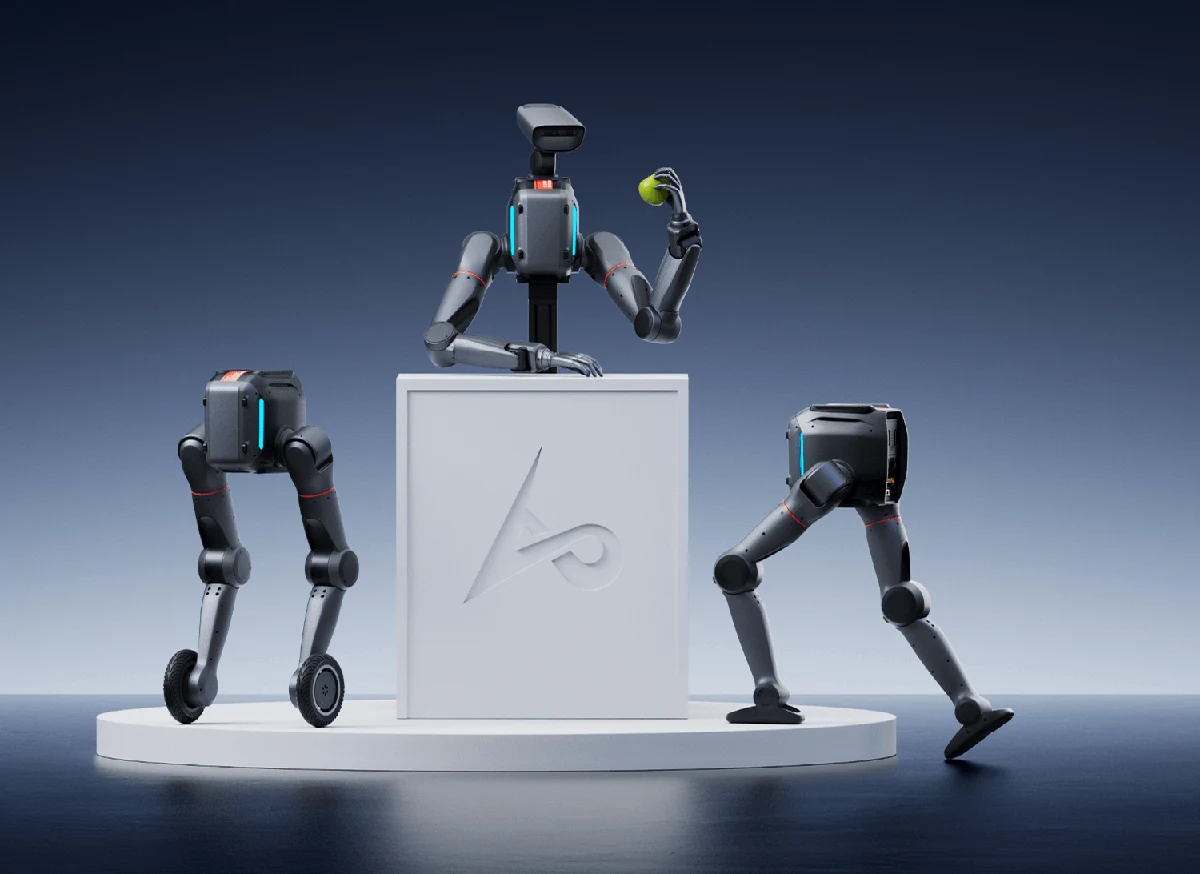
TRON 2 separates dual-arm, sole-foot, wheeled and mobile-arm configurations. EDU adds development, data and VR teleoperation tools; its payload and speed figures still depend on the configured form.
This editorial assessment concerns industrial buyer readiness. It is not an independent performance test.
| EU regulatory fit | Unknown |
|---|---|
| Cybersecurity fit | Unknown |
| Serviceability fit | Unknown |
| Supply chain fit | Unknown |
Manipulation and Perception
Arm configuration: 5 kg maximum per arm, 3 kg at extension, 730 mm arm reach; 10 kg dual-arm headline. Mobility configuration: 30 kg flat-ground transport and 20 kg stair climbing are separate ratings. 5 m/s arm-tip speed is not chassis travel.
Manual lists waist RGB-D and IMU on both editions; head/wrist cameras on EDU arm/mobile-arm configurations. EDU expansion module uses Intel Core Ultra and 2 TB storage; older i7-1165G7 dataset description superseded.
SDK and Integration
EDU manual enables Python/C++, ROS1/ROS2, SDK, simulation, local data and PICO 4 Ultra VR teleoperation. Standard omits those entitlements. Public SDK code availability alone does not unlock Standard hardware.
| API type | EDU SDK and data platform |
|---|---|
| Languages | Python, C++ |
| ROS support | ROS1/ROS2 listed for EDU, plus standalone low-level SDK. |
| Simulation | EDU: Isaac Sim/Isaac Lab, MuJoCo and manufacturer-listed Gazebo; exact form/revision must match. |
| Offline operation | Local control is distinct from cloud training, content generation and support-log processing. |
| Teleoperation | PICO 4 Ultra VR for EDU dual-arm configuration; manual marks Standard unavailable. |
| Software updates | OTA support and compatible controller revisions require confirmation. |
| Documentation | Open documentation |
| Code examples | Open repository |
| Integration constraints | Manual differentiates Standard/EDU software, camera and expansion-compute scope. Mobile-arm and locomotion robot identifiers are different; do not combine all DOF into a generic standard body. |
Safety Notes
Current manual says the emergency stop enters torque-off mode and cuts motor power. Plan support and fall recovery for legged forms. Boundary protection in the EDU matrix is not independently verified safety-rated collaboration.
Compliance and Certificates
| Standard | Status | Jurisdiction | Evidence |
|---|---|---|---|
| CE marking | Unknown | European Union | No exact-model EU Declaration of Conformity or certificate verified. |
Commercial Readiness
| Pricing | No exact-model, current regional quotation verified. |
|---|---|
| Price range | Quote-based or unverified |
| Lead time | Needs verification |
| Availability regions | China, International orders subject to quotation |
| Spare parts | Battery, actuator, end-effector and compute revision compatibility, stock and repair time not established. |
| Warranty | Exact-model warranty, exclusions and return-shipping costs require contract confirmation. |
| Configuration and pricing basis | Configuration-specific quotation required. |
| Distributors and service | ISEE states Türkiye distribution and service; exact model/edition fulfilment requires confirmation. |
Website orderability is not independently verified inventory or a delivery guarantee.
Specifications
| Height | Unknown |
|---|---|
| Weight | Unknown |
| Payload | Unknown |
| Runtime | Unknown |
| Battery and runtime conditions | 46.8 V / 9 Ah ternary-lithium replaceable battery; charger approximately 54.2–54.275 V / 10 A across current page/manual. Manufacturer charging: 20–80% in 30 minutes, 20–100% in 54. No repeatable per-form endurance verified. |
| Degrees of freedom | Unknown |
| Max speed | Unknown |
| Configurable forms | Dual-arm, sole-foot, wheeled and mobile-arm kits; software entitlement differs between Standard and EDU. Source ↗ |
| Degrees of freedom summary | Seven per arm, five per leg, two head; wheel joints and installed arm/leg modules change the whole-system total. Source ↗ |
| AI computing box | Current EDU expansion: Intel Core Ultra, 2 TB storage; Standard omits the module in the manual. Source ↗ |
| Standing height by form | Sole: 987 mm; wheeled: 1015 mm. Arm/mobile-arm configuration has different dimensions. Source ↗ |
| Maximum movement speed | Sole: 2–3 m/s; wheeled: 3–5 m/s. Form/conditions matter; no single chassis maximum assigned. Source ↗ |
| Sensors | Waist RGB-D/IMU on both; head/wrist RGB-D only on EDU dual-arm/mobile-arm configuration. Source ↗ |
Sources and Further Reading
-
FluxVLA Engine official repository ↗
LimX Dynamics / GitHub · Accessed Nov 1, 2026
VLA engineering workflow for data, training, evaluation and deployment. Open framework does not establish robot-wide offline operation or production task success.
-
LimX company profile and dated milestones ↗
LimX Dynamics · Accessed Nov 1, 2026
January 2022 Shenzhen founding; February 2026 USD 200m Series B and July USD 200m Pre-IPO, USD 400m over six months. Hardware portfolio and earlier research platforms inspected.
-
limxsdk-lowlevel official repository ↗
LimX Dynamics / GitHub · Accessed Nov 1, 2026
C++11 and Python interfaces; prebuilt libraries, headers, wheels and examples. SDK implementation source is not included. Supports specific robot types/revisions; ROS1/ROS2 builds and standalone use. Public repository does not grant Standard/Lite hardware developer entitlement.
-
LimX TRON 2 product page ↗
LimX Dynamics · Accessed Nov 1, 2026
Official supplier product page; includes dual-arm payload, modular forms, all-terrain mobility, industrial/research positioning, and VLA/data workflow claims.
-
LimX TRON 2 specifications ↗
LimX Dynamics · Accessed Nov 1, 2026
Official specification table for TRON 2 EDU and TRON 2 Standard.
-
TRON 2 official four-page brochure ↗
LimX Dynamics · Accessed Nov 1, 2026
Image-only manufacturer PDF inspected. Walking/sole 3 m/s versus wheeled 5 m/s; modular forms. Filename contains a date inconsistent with December 2025 launch history, so it is not used as announcement date.
-
TRON 2 open-source locomotion example ↗
LimX Dynamics · Published Oct 30, 2026 · Accessed Nov 1, 2026
Current official EDU guide, dated 30 October 2026: Isaac Sim/Isaac Lab training and deployment. Check exact sole/wheeled/mobile-arm configuration; not Standard development entitlement.
-
TRON 2 user manual — configurations and developer entitlement ↗
LimX Dynamics · Published Jun 11, 2026 · Accessed Nov 1, 2026
Manual table: EDU supports SDK, VR teleoperation, data and simulation; Standard omits them. Sole standing height 987 mm, wheeled 1015 mm, mobile/arm configurations differ. 5 kg maximum vs 3 kg extended single arm; 30 kg flat-ground mobility vs 20 kg stairs. Emergency stop enters torque-off, so support collapse risk must be assessed.